
Books, Apps, or Software? Choosing Your Homeopathy Repertory Tools
When new students enroll in school, a lot of thought and discussion goes into what repertory software they should get. Choosing software is exciting, and in all that excitement it is easy to assume that better tools will make repertorizing easier.
Sometimes they do. But a faster search is not the same thing as a better repertorization, and the tool you reach for should depend on what you are actually trying to do with it.
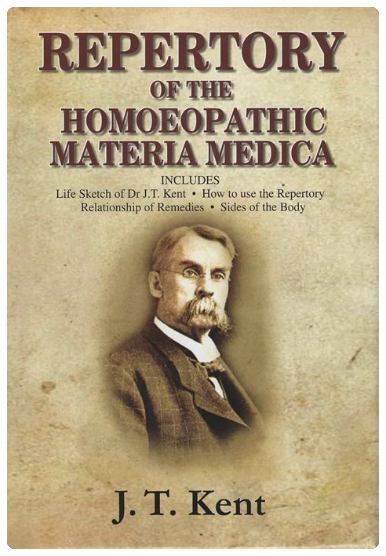
When I was a new student, Kent's Repertory was on our book list and that is what I bought. I am glad I did.
Books teach you the repertory
Every student should spend real time with a repertory in print. Not out of any resistance to technology, because I use technology constantly. It is that a physical repertory teaches you something a search bar structurally cannot.
I made a post on Instagram a while ago about a repertory being like an old book store. You can read it here.
When browsing a repertory book you begin to understand how it is built. You see where symptoms live, and how chapters differ from sections. You flick through the pages and notice rubrics you would never have thought to search for, along with the subrubrics, the layout, and the sentence structure.
And yes, you will get a little lost in it. That is not a waste of time. Getting lost is how you learn the geography.
Kent's Repertory may not end up being the one you use most in practice, and many schools teach from Murphy's MetaRepertory, which is a fantastic modern book with a clinical outlook. Kent remains, in my opinion, the best place to learn the architecture of repertory work. Many of the modern software tools are built on Kent's original structure.
Apps give you access
Repertory apps do a different job. They put useful information in your pocket, which was a huge deal for me because I was rarely at home by my bookshelves when someone asked me a question.
I use my repertory apps daily, often several times a day, and I could not tell you how many times I have reached for my phone to look something up. I am always thinking about homeopathy and remedies, and I tend to think in repertory terms as I go through daily life, for the ongoing practice.
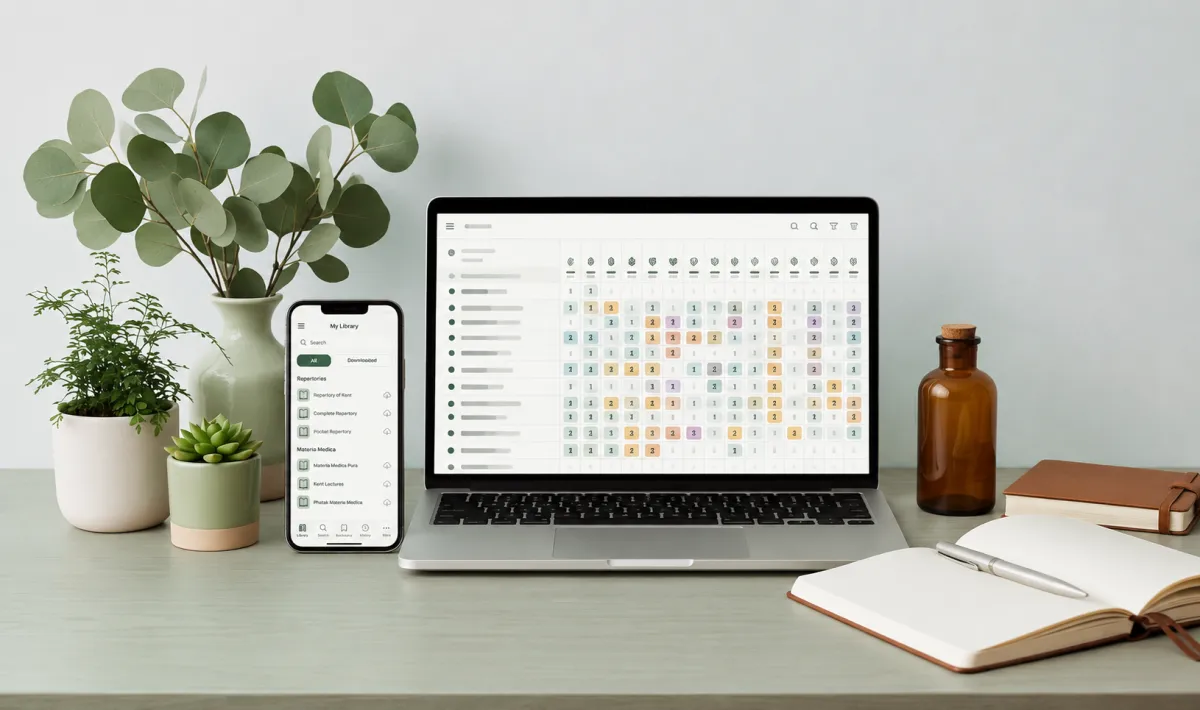
Apps help you check a rubric, look up a remedy, or confirm a keynote. Some have full repertory features and are perfectly great working tools. Reading a full repertorization on a phone screen is another matter, and a laptop or a paper copy still wins there.
Having access is not the same as understanding. Finding a rubric quickly tells you nothing about whether that rubric belongs in the case, whether it honestly represents what your client said, or whether there is a better one sitting two lines below it. We begin to be able to judge the effectiveness of rubrics from learning the repertory rather than searching it.
Modern tools are fantastic and do speed up the search, but the results are only good if you already know something about the repertory. You have to be able to tell which rubrics can be relied upon and which ones are less helpful.
Read more about professional and home prescriber apps here:
https://rubricwise.com/post/homeopathy-repertory-apps
https://rubricwise.com/post/similia-homeopathy-home-prescriber-app
Software helps you analyze
Once the foundations are there, good software changes how efficiently you can work. This is where software options like RadarOpus and Similia become an integral part of the process.
I studied throughout my four years at school with RadarOpus, I love it, and I still use it daily. It gives you depth: detailed source and proving information, remedy relationships, cross-referencing, and several different analytical routes into the same case. After all these years I feel like I have barely scratched the surface of what it can do, and when I am struggling to figure out a case via my usual approach, having more than one way in is worth a great deal. I can get creative with using different clipboards and repertories and different styles of repertorizing - such as Boenninghausen and using the Q Rep and searching within proving material directly.
Similia is the newest software and it is browser-based so it moves between phone and computer without friction. This was something I really wanted, and I have been genuinely so excited to explore Similia over the past year. I have spoken at length about the semantic search over at Instagram, which is so helpful in the moment when you know exactly what your client said and cannot work out how that language becomes repertory language.
Read more about Repertory Software here:
https://rubricwise.com/repertory-software
What I actually use each one for
People ask me all the time if I would choose RadarOpus or Similia. Right now I couldn't decide between them, and that's not me being indecisive. I use them each for different tasks and I use both all the time.
RadarOpus is where I go for proving information and for my main repertorizing work for clients. It's the system I know best and aids me with the techniques I have formed over the past few years. I am very excited about Luke Norland's ongoing work with Radar and his Synoptic Guide repertory.
Similia is where I tend to turn the most on the move. Repertory work on my phone that I can pick back up on my laptop has been so valuable to me because I am always thinking about my cases and I remember something I want to look up. The semantic search, and searchable materia medica has been so helpful. I think the reason semantic search works so well for me is that I already learned a lot about rubrics and repertory structure first, through Kent and then Synthesis. I am seeing the results the semantic search provides and able to use my discernment to decide which rubrics to take.
I have also found myself using Similia for the Complete Repertory a lot, which I never worked with at school, and I will often compare it against Synthesis in RadarOpus. I naturally assumed I would be spending a lot of time in Murphy's MetaRepertory, but I find myself in Complete Repertory in Similia. Marco and the team at Similia built an excellent product with new features all of the time and I am genuinely excited about how it will continue to develop.
What I would tell a new student
Go with the program your school works with. It is hard to follow along when you are not using the same tools that are being taught and trying to replicate in another system costs you more than the feature list benefits. If your school does not specify, most of these have a rental or subscription option, so try one before you commit and leave the decision making for when you are starting your practice.
In my opinion, you do not need full access to everything as an early student. The student package is plenty. Synthesis Adonis was rolled out while I was at school and it opened up a bigger selection of remedy options, which was fantastic as it brought to light remedies that might have otherwise been overlooked, but it was also overwhelming as a new student.
I would often switch back to Core Synthesis or Treasure models just to reduce the noise while I was trying to learn.
One honest caution I will say - if the software performs the translation for you before you have learned to do it yourself, what you build is a dependence on the search rather than a skill in the repertory.
That does not mean avoid the technology. Learn to use it well, and know what it is doing on your behalf. The repertory is a tool and just one part of a good case.
Books, apps, or software? The bottom line.
You don't have to pick just one. They aren't competing for the same job.
Start with physical books to build your foundation and learn the geography of the repertory. Once that architecture is in your head, layer on apps for quick daily access and software for deep case analysis.
Being fast at operating software doesn't make you good at repertorizing. Get the books in your hands first so every digital tool supports your thinking instead of substituting for it.
If you are weighing up apps, or trying to decide between the software options, there is more on my resources page.
Disclosure: I am a Similia affiliate partner and you can use code RUBRICWISE for 10% off the paid version. My recommendations are my personal opinions at the time of writing, based on my own journey with repertory tools. My thoughts on establishing repertory fundamentals before software, are the same whether you decide to purchase through my link or not.